EDDM vs. direct mail: Which is best for your business goals?
Adam Maloney
Mail marketing is making a serious comeback in the digital era. You might be surprised to read this, but with such a heavy focus on put digital advertising, physical mail really stands out. In fact, a USPS study found that physical ads were more effective than digital ads at leaving a lasting impression, making it a powerful tool for connection and conversion.
But one question often asked by those looking to launch a direct mail campaign is, should you go with Every Door Direct Mail (EDDM) or traditional direct mail?
This guide will walk you through the key differences between EDDM and direct mail when it comes to cost, targeting, and use cases, so you can confidently pick the best approach for your business.
What is EDDM?
Every Door Direct Mail (EDDM) is a service from the U.S. Postal Service that allows you to send postcards, flyers, and mailers to every address within a specific postal route, without the need for a mailing list.
It’s built for creating local impact. Think restaurants, hair salons, home repair services, or fitness centres, trying to reach every household in a neighborhood.
Advantages of EDDM
1. No need to buy mailing lists
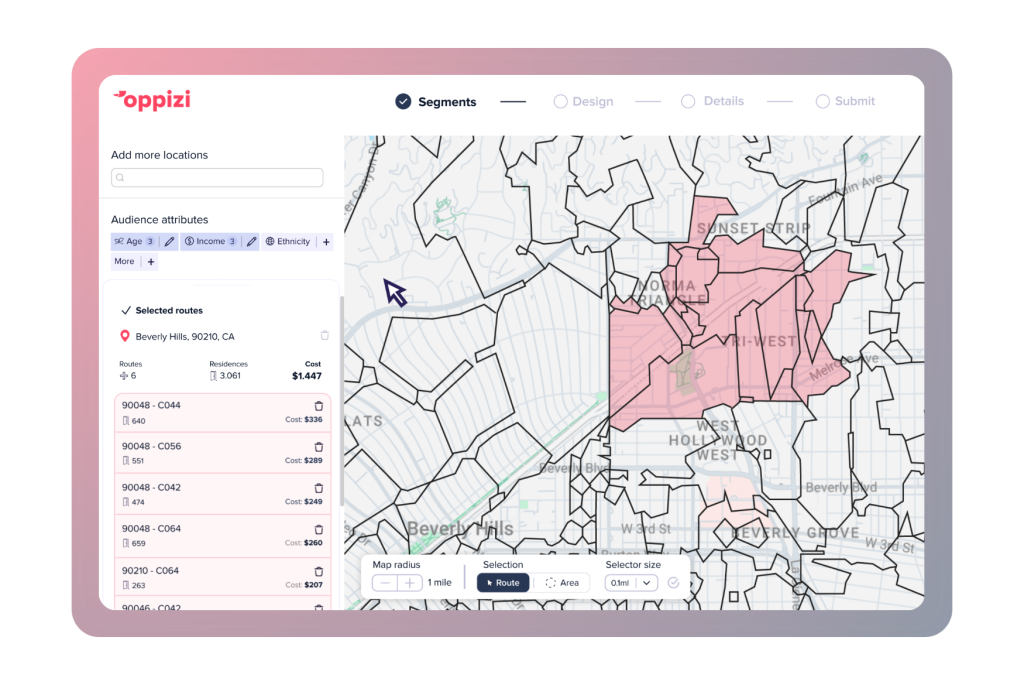
EDDM simplifies direct mail by enabling targeting of entire neighborhoods or ZIP codes without needing to buy or manage mailing lists, saving time and money.
2. Lower postage costs
Since EDDM is handled in bulk and doesn’t require individualized addressing, USPS offers lower postage rates.
3. Easy to launch and manage
EDDM campaigns can be set up quickly using USPS tools or services like EDDM.com, making it ideal for small businesses or marketers who want to get started without complex logistics.
4. Great for building brand visibility in a specific area
By reaching every home within a selected area, EDDM is perfect for hyper-local marketing. It’s especially effective for promoting grand openings, special offers, or local events where brand awareness is key.
Disadvantages of EDDM
1. No option for personalization
Since EDDM targets all addresses on a postal route, you can’t personalize your message with names or tailored offers, which can reduce engagement compared to targeted mail.
2. Limited targeting options
While EDDM allows route filtering based on broad demographics such as age and income, it does not offer the targeted precision of direct mail, which can utilize individual behaviors, interests, and purchase history.
3. Less flexibility in design sizes and formats
USPS has specific sizing requirements for EDDM. This limits your creativity and may restrict the types of offers or visuals you can include.
What is traditional direct mail?
Traditional direct mail is a marketing strategy where businesses send personalized physical mail, such as postcards, brochures, or catalogs, directly to targeted individuals based on specific mailing lists.
These mailing lists are carefully curated using demographic data, customer behavior, purchasing history, or other segmentation criteria. This allows companies to deliver highly relevant offers and messages to audiences like frequent customers, retirees, affluent households, or pet owners, increasing the chances of engagement and conversion. Traditional direct mail can be a powerful tool for direct response marketing, brand awareness, and customer retention.
Advantages of direct mail
1. Allows for precision targeting
Direct mail allows for precise targeting based on demographics, purchase history, and business type through the use of detailed mailing lists and CRM data. This ensures your message is delivered to those who are most likely to respond or take action.
2. You can create personalized messaging
Unlike EDDM, direct mail lets you customize your message with names, specific offers, and dynamic content based on the recipient’s behavior or preferences, which can boost response rates.
3. Higher engagement potential
Personalized, well-targeted direct mail feels more relevant and trustworthy. According to the Data & Marketing Association, targeted direct mail generates significantly higher response rates than mass mailing, with a 9% average response rate.
4. Supports B2B and B2C campaigns
While EDDM is designed for local household saturation, traditional direct mail works well in both B2B (e.g., targeting specific job titles or industries) and B2C contexts (e.g., re-engaging previous customers or reaching niche audiences).
Disadvantages of direct mail
1. More expensive
Costs can add up with list purchases, personalization, premium printing, and higher postage. But this added expense often translates to better ROI if campaigns are well-executed.
2. Requires mailing list management or CRM integration
To make the most of direct mail, you need access to clean, up-to-date mailing data. This may mean renting lists or syncing with your CRM, which adds a layer of complexity and responsibility.
3. More complex to execute
From data segmentation and variable printing to compliance and tracking, direct mail campaigns involve more moving parts. Businesses may need professional support or advanced tools to manage the process effectively.
How do EDDM and direct mail compare?
Now let’s take a closer look at some specific areas such as cost, targeting, and engagement, and see how EDDM and direct mail compare.
| Category | EDDM (Every Door Direct Mail) | Direct Mail |
| Postage fees | USPS postage: $0.219 to $0.223 per piece | First-class postage: $0.35 to $1.22+ per piece |
| Mailing list | Not required | Mailing list rental or management required |
| Targeting ability | Mass delivery to all addresses on chosen routes | Pinpoint targeting by income, age, interests, purchase history |
| Best use cases | Local promotions, new openings, broad awareness campaigns | Highly targeted campaigns designed for engagement or retention |
| Response rates | Average 1–2% | Typically 4.4% or higher for targeted campaigns |
| Design & format | Limited USPS-approved sizes and formats | Wide variety: postcards, letters, catalogs, 3D mailers, self-mailers |
| Tracking | Providers like EDDM.com provide comprehensive tracking dashboards | Most direct mail platforms offer real-time tracking |
Cost: Which is more budget-friendly?
One of the main factors influencing whether marketers opt for EDDM or direct mail is the cost involved.
EDDM
- USPS postage typically ranges from $0.219 to $0.223 per piece
- No need for purchasing a mailing list
- Simple setup reduces design or agency fees
Direct mail
- First class postage typically ranges from $0.35 to $1.22 per piece depending
- You also need to take into account the costs for:
- Mailing list rental or management
- Personalization and segmentation
- Variable data printing
Targeting: Mass visibility vs. pinpoint precision
EDDM
With EDDM, you’re sending mail to everyone in a chosen area. This is great for:
- New openings
- Local promotions
- Broad awareness campaigns
It’s important to note that targeting a niche product or service with EDDM may result in wasted costs by reaching uninterested recipients.
Direct mail
With direct mail, you can define your audience by:
- Income
- Age
- Purchase history
- Household size
- Interests
- Geographic radius
This level of detail helps you send fewer but far more effective mailers.
Engagement: How well do they capture attention?
EDDM
EDDM’s one-size-fits-all approach makes it harder to personalize. And without personalization, it’s easier for your piece to blend in with the rest of the mail stack.
Direct mail
Direct mail, on the other hand, can use names, custom offers, and dynamic QR codes that guide people straight to your website, booking page, or funnel. In fact, by implementing personalization techniques in your direct mail, you can increase response rates by up to 135%.
Response rates: Which drives more action?
- EDDM response rates: Average between 1–2%
- Direct mail response rates: Typically 4.4% or higher for targeted campaigns
While direct mail typically yields higher response rates, EDDM can be a more economical choice for objectives like increasing local brand visibility or advertising a physical event. It’s important to consider your specific goals alongside response rates when deciding between these options.
Design and format options
EDDM
- With EDDM, your mailer has to meet USPS size specifications
- Fewer size options than traditional direct mail
Direct mail
- With direct mail you can choose from postcards, catalogs, letters, 3D mailers, folded self-mailers, and more
- The freedom to design your mailer how you wish can help your piece stand out and reflect your brand identity
Delivery times & tracking
EDDM
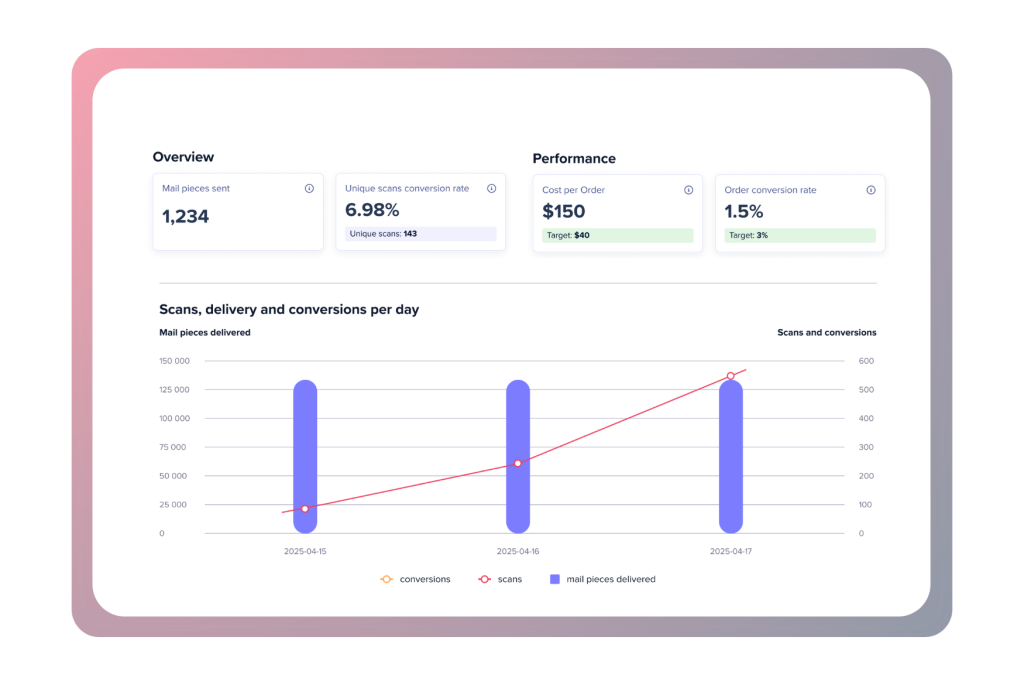
EDDM can usually take between 2–5 business days to arrive. While USPS offers no tracking beyond delivery, platforms like EDDM.com allow you to track the performance of your campaign on their dashboard. This can include number of mailers sent, QR code scans, promo code redemptions, conversions, and more.
Direct mail
Direct mail usually arrives in 3–10 business days and most platforms also allow you to track the real-time performance of your campaign also.Examples of real-world use cases
Frequently asked questions
Can I personalize EDDM campaigns?
Not in the traditional sense. Because EDDM doesn’t use a mailing list, you can’t personalize mailers with names, purchase history, or household-specific data. However, you can still tailor your message broadly to the type of neighborhood or ZIP code you’re targeting.
Can I combine both EDDM and direct mail?
Absolutely. Many businesses use EDDM to create broad local awareness and follow up with direct mail campaigns for more targeted engagement. It’s a cost-effective way to build a funnel from mass reach to personalized conversion.
Is EDDM only for small businesses?
No. While EDDM is especially popular with small and local businesses, larger brands often use it for local store activations, grand openings, or geo-targeted brand campaigns—particularly when entering new markets or launching regional promotions.
Final thoughts
So which is best for your business? It’s important to establish business goals so that you can determine which method to choose. EDDM is perfect for businesses on a budget that want local exposure fast, while direct mail is more suitable for targeting specific individuals and lead nurturing.
Ultimately, the right choice depends on your audience, goals, and budget. The good news? You don’t have to choose just one. You can always integrate both strategies into a comprehensive marketing plan.
Ready to try EDDM? Start building your campaign today on EDDM.com, or visit our blog for additional insights on effective mail marketing for business growth.